| |
| Wednesday, 02 September 2026 |
| The Age of Walnut: 1660-1740 |
| Janusz Karczewski-Slowikowski |
 |
Walnut was much favoured by the Elizabethans and became extensively used for fashionable furniture well into the 18th century. Stylistically, the age encompassed the Restoration, William & Mary, Queen Anne and Baroque styles. Technically, the period saw the transition from the framed panel construction of the joiner to the dovetailed carcass work of the cabinet maker and the introduction of veneering, parquetry and marquetry as new and stunning forms of decoration. After a 35 year-long career in higher education, Janusz Karczewski-Slowikowski is now a freelance lecturer and researcher in English furniture history. He seeks to explain furniture in terms of the skills and materials employed in its design and construction and also its socio-economic significance. As the one-time proprietor of an antique shop, his interest in collecting was such that he became known as the dealer who bought but never sold … Suggested reading for September lecture The Age of Walnut 1660-1740 by Janusz Karczewski-Slowikowski English Furniture 1660-1714 by Dr Adam Bowett Published by ACC Art Books, 1999 Photograph courtesy of Janusz Karczewski-Slowikowski |
|
| Wednesday, 01 July 2026 |
| She Loves You: The Music of the Sixties 1960-64 |
| Steve King |
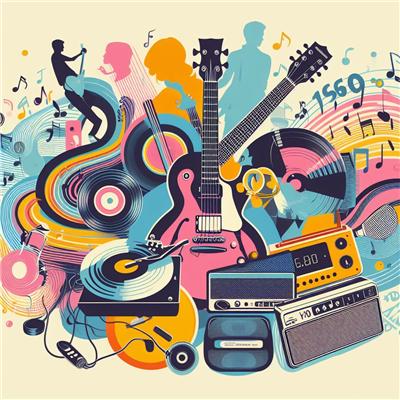 |
By 1960 interest in rock ‘n’ roll had started to fade, its biggest star was moving on and a new generation of teenagers were seeking something different. It came in the form of the Beatles, who broke all the rules and all the records. The first five years of the 1960s was one of the most creative and innovative periods in the history of music. This lecture will feature all the major artists, important songs and principal musical genres.
Steve King has spent 35 years working in the radio industry as a Broadcaster, Programmer and Events Director. He has managed some of the biggest radio brands in the UK and has interviewed and worked with many well-known popular music artists. He has also directed over 50 multi-artist events at venues including the Royal Albert Hall, London Palladium and Manchester Arena. This lecture will take place at 11:15am following our Annual General Meeting at 10:30am. There will be no afternoon lecture. Reading List Yeah! Yeah! Yeah!: The Story of Modern Pop by Bob Stanley published by Faber & Faber, November 2016 The Beatles All These Years Volume One: Tune In by Mark Lewisohnpublished by Little, Brown, October 2013 |
|
| Wednesday, 03 June 2026 |
| James Whistler: The Gentle Art of Making Enemies |
| Douglas Skeggs |
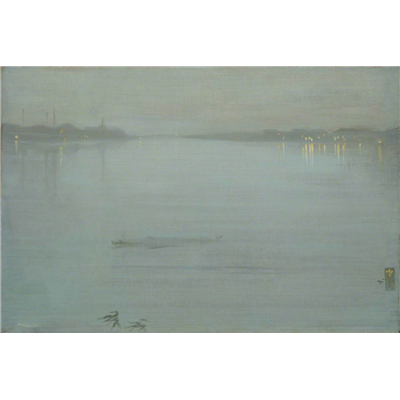 |
Self-assured, affected and irreverent, the owner of a razor-sharp wit, Whistler scandalised London society during the 1870s. American by birth, he trained as an artist in Paris, where his bohemian lifestyle made him one of the personalities of the city. Annoyed by the criticisms of his work at the Salon des Refuses, he moved to London, only to find the English even more opposed to his ideas. His flamboyant and eccentric ways made him both admired and detested in equal measure, and yet his quiet, meditative paintings ultimately assured him a place alongside Oscar Wilde as one of the high priests of the Aesthetic Movement. A retrospective exhibition – the first major European exhibition of his work in 30 years - will be held at Tate Britain from May to September 2026. Click here for more details.
Douglas Skeggs Douglas read Fine Art at Magdalene College Cambridge and has been a lecturer on paintings since 1980. In that time he has given over 8000 lectures to universities, colleges and art societies. He was the director of The New Academy of Art Studies for three years and is presently a regular lecturer at The Study Center, Christie's course 'The History of Art Studies' and other London courses. Among his more improbable venues for lectures are the bar on the QE2, MI5 headquarters, the Captain's Room at Lloyds, and an aircraft hanger in a German NATO base. Overseas he has lectured in Belgium, France, Germany and Spain, and has taken numerous tours around Europe. He has written and presented various TV documentaries, notably the Omnibus programme on Whistler and the exhibition video on William Morris. Three one-man exhibitions of his paintings have been held in England and Switzerland. He has published five novels, which have been translated into 8 foreign languages, and his book on Monet, River of Light, has sold 30,000 copies in England, America and France. This is Douglas' fifth visit to The Arts Society Royal Leamington Spa! He spoke to us on Goya in 2004, Turner in 2014, and he has given his lecture David Hockney: The Old Master of the Modern World twice (!!), once in 2006 and again in 2017. There is a 'current' exhibition of Whistler's work - well it will be current by 3rd June - at Tate Britain. It opened on 21st May and runs until 27th September. Reading List for Lecture June 2026 James Whistler - 'The Gentle Art of Making Enemies’ by Douglas Skeggs James McNeill Whistler by Carol Jacobi, published by Tate Publishing 2026. Falling Rocket: James Whistler, John Ruskin, and the Battle for Modern Art by Paul Murphy, published by Pegasus Books, 2025. Image: Nocturne: Blue and Silver - Cremorne Lights James Abbott McNeill Whistler 1872 Image Credit: Tate |
|
| Wednesday, 06 May 2026 |
| Jan van Eyck |
| Paula Nuttall |
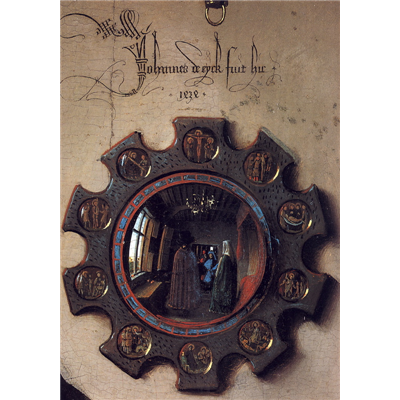 |
Internationally regarded as the greatest painter of his day, Jan van Eyck (d.1441) was an innovative and technically brilliant observer of reality in an era when naturalism was becoming the goal of every artist. His paintings still astonish on account of their dazzling evocations of textiles, metalwork and distant landscapes. This lecture will discuss Van Eyck’s achievements, his career at the Burgundian court and his clientele in Bruges, and survey his works, including the celebrated Ghent Altarpiece, and the so-called Arnolfini Marriage in the National Gallery.
Paula Nuttall is a specialist in Italian and Northern European Renaissance art and has published widely, notably From Flanders to Florence: The Impact of Netherlandish Painting 1400-1500 (Yale, 2004). She has collaborated on major exhibitions, including Jan Eyck: an Optical Revolution (Ghent, 2020), is a former Director of the V&A Medieval and Renaissance Year course, and a lecturer at both the Courtauld Institute and the British Institute of Florence. Image: The Arnolfini Portrait (detail) Jan van Eyck 1434 Image credit: The National Gallery, London T. H. Borchert, Jan van Eyck, published by Taschen A. Acres, Jan Van Eyck Within his Art, published by Reaktion In addition, the website 'Closer to Van Eyck' has wonderful zoomable photographs of every work he painted, including the Ghent Altarpiece pre and post restoration: https://closertovaneyck.kikirpa.be/ |
|
| Wednesday, 01 April 2026 |
| Chant and the Origins of Polyphony |
| Patrick Craig |
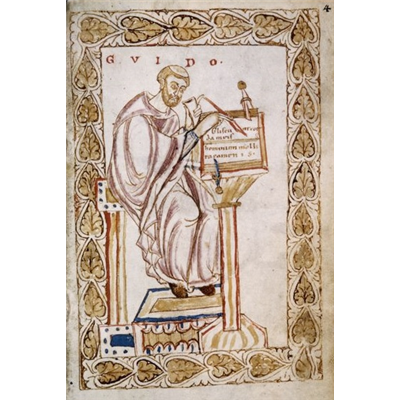 |
The Old Testament book of Psalms is full of exhortations to worship God with song. But, for the majority of history, music has been shared without it ever being written down. The origins of chant, the birth of polyphony and the invention of musical notation led to some of the most imaginative and spectacular pieces of music that are based on a foundation of Gregorian chant. Recommended Reading List for Lecture to TASRLS April 2026 Chant and the Origins of Polyphony by Patrick Craig Capturing Music: The Story of Notation by Thomas Forrest Kelly Medieval Polyphony and Song by Helen Deeming and Frieda van der Heijden Renaissance Polyphony by Fabrice Fitch The Pelican History of Music vol.1 - Ancient Forms to Polyphony - ed. Denis Stevens and Alec Robertson
Patrick Craig is a Vicar Choral at St Paul’s Cathedral. For twenty years he combined this with an international career singing with the world-renowned early music consort The Tallis Scholars. He founded and conducts the country’s leading all-female professional choir, Aurora Nova. He lectures regularly, and has conducted concerts for the BBC Proms, the Brighton, Lichfield and Aldeburgh Festivals, and with the City of London Sinfonia. Image: 'Guido of Arezzo depicted in a medieval manuscript' Image credit: Wikipedia |
|
| Wednesday, 04 March 2026 |
| New Dawn: A Memorial for Women's Suffrage in the Houses of Parliament |
| Mary Branson |
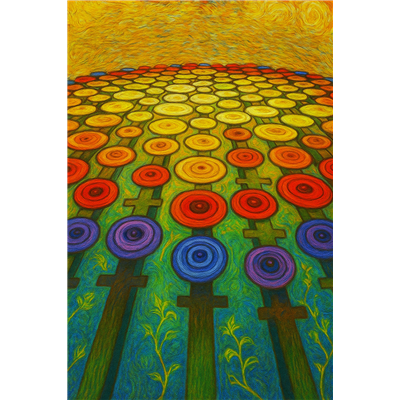 |
In 2014 Mary Branson won a national competition to be artist in residence for Women’s Suffrage in Parliament and to design a work of art to celebrate the centenary of the Women’s Suffrage movement. This lecture will describe her artistic practice, her brief, how she came up with the concept for the monument and how she then created her iconic artwork New Dawn, the first permanent piece of contemporary abstract art in the Palace of Westminster.
Mary Branson is best known for her large-scale conceptual light works and installations. She has created light and sound works for the London 2012 Olympics, Royal Holloway University and Salisbury Cathedral, as well as Harvest, a huge site-specific installation at Box Hill in Surrey, highlighting the plight of farmers facing climate change. She enjoys the challenge of using landscape and architecture as a backdrop to site-determined pieces. Image: Chat GPT representation of 'New Dawn' sculpture, Houses of Parliament 2016 |
|
| Wednesday, 04 February 2026 |
| Summer in February: Art, Love and Loss in Lamorna on the Eve of War |
| Alison Bevan |
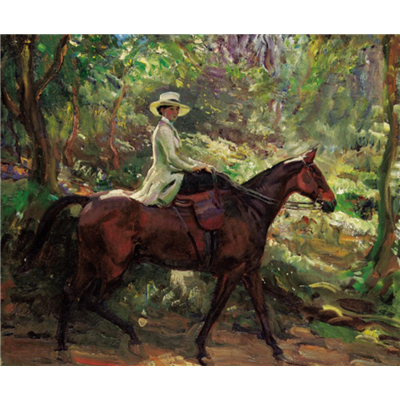 |
When David Evans discovered his late father Gilbert's diaries from his time as Land Agent in the Lamorna Valley in Cornwall, in the lead-up to the First World War, he learned for the first time of the tragic tale of his father’s relationship with Alfred Munnings' first wife, Florence Carter-Wood.
Their story was brilliantly brought to life in Jonathan Smith's novel "Summer in February", which tells the story of the love triangle set in an Edwardian art colony. The novel is known for its beautiful prose and its portrayal of the decline of a golden age, culminating in tragedy.
Alison Bevan has spent her entire career working in public art galleries, including the Graham Sutherland Gallery in Pembrokeshire, the Glynn Vivian Art Gallery in Swansea, and the Penlee House Gallery & Museum in Penzance. In 2013 she was awarded the British Empire Medal for services to Cultural Heritage in Cornwall. She now works as a freelance lecturer, curator and consultant and is Chair of Bristol Museums’ Oversight Board, a Fellow of the Museums Association, and an Honorary Research Fellow of the University of Bristol. For further reading follow this link: https://www.tasrls.org.uk/DocumentStore/Summer%20in%20February%20Reading%20List.pdf Image: The Morning Ride, Estate of Sir Alfred Munnings |
|
| Wednesday, 05 November 2025 |
| The Legendary Lee Miller |
| Antony Penrose |
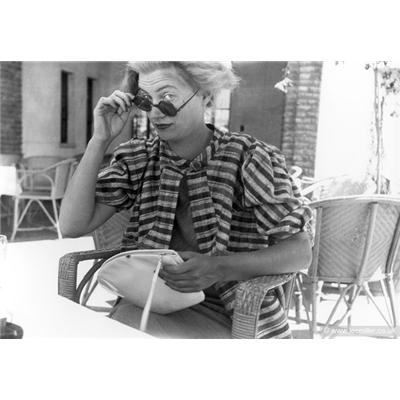 |
Lee Miller was an American photographer and photojournalist. She was a fashion model in New York City in the 1920s before going to Paris, becoming a fashion and fine art photographer there. She intended to become an apprentice with the photographer Man Ray, but soon became his model and muse.
During World War II, she was a war correspondent for Vogue magazine, covering events such as the London Blitz, the liberation of Paris and the concentration camps at Buchenwald and Dachau. She was the only woman combat photographer with the allied infantry in Europe during the War. Her story will be told by one of the people who knew her best, her son Antony Penrose. There will be a major exhibition of Lee Miller's work at Tate Britain from October to February. Click here for more details. Click here for a reading list for this lecture. _________________________________________________________________ For the past 30 years Antony Penrose has conserved and disseminated the work of his parents, Lee Miller and surrealist painter Roland Penrose. He is the director of the Lee Miller Archives and The Penrose Collection at Farley House in Sussex, and has seen his parents' work featured in major exhibitions at the V&A, National Portrait Gallery, Manchester Art Gallery, Scottish National Gallery of Modern Art and the Whitworth. His publications have included The Lives of Lee Miller, The Angel and the Fiend, The Home of the Surrealists, Roland Penrose the Friendly Surrealist and The Boy Who Bit Picasso. Image Cairo 1938 Copyright Lee Miller archives, England 2025. |
|
| Wednesday, 01 October 2025 |
| Tamara De Lempicka: Art Deco Diva |
| Alexandra Epps |
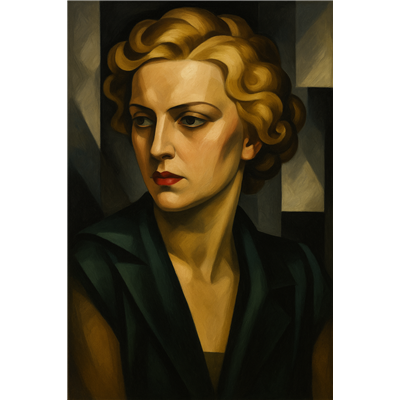 |
Tamara de Lempicka's story is one of self-invention. From her early beginnings as an aristocratic fugitive from the Russian Revolution, to later taking Paris by storm as a successful artist living on her own terms, she has become an icon of the Roaring Twenties. Few artists sum up an epoch quite so completely - a true Art Deco diva.
Alexandra Epps’ background is in design, having practised as a graphic designer running her own design consultancy for many years. She now works as a guide to the City of London, and as a guide and lecturer to Tate Britain, Tate Modern, and the Guildhall Art Gallery Click here for the reading list for this lecture. Image: Chat GPT representation of Tamara De Lempicka |
|
| Wednesday, 03 September 2025 |
| The Textile Revolution of the 1950s and 60s: Post-War Female Designers |
| Ashley Gray |
 |
The history of Britain is intricately woven with the history of textiles. Following the Second World War, there was a desire for change, for colour, and for inspiration in the home. This energy and innovation were led by female textile designers destined to revolutionise design internationally for decades to come. Through their designs, they brought modern and contemporary art into the home.
Ashley Gray is a leading specialist and curator in Modern Textiles. He has served on the Council of the British Antique Dealers’ Association, and as a curator and archivist he works with institutions and foundations on conservation and exhibition projects. He is currently researching the role of David Whitehead Ltd of Lancashire in commissioning innovative modern designs in the Festival of Britain era. Click here for the Reading List for Ashley's lecture.
Image: Untitled (Traffic Light), 1952, Jacqueline Groag (1903–1986) / Roller Printed Rayon, David Whitehead Ltd |
|
| Wednesday, 02 July 2025 |
| A Haaaand-Baaaag?: The Importance of Being Oscar (and Earnest!) |
| Simon Whitehouse |
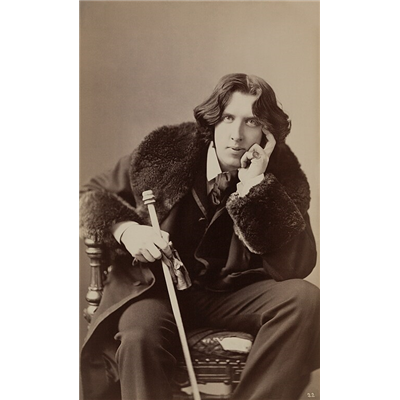 |
Oscar Wilde’s great literary and theatrical successes began with The Picture of Dorian Gray in 1890 and was followed by four smash hits in three years. His greatest play, The Importance of Being Earnest, is one of the funniest, most performed and frequently quoted plays in the English-speaking world. Described as “A Trivial Comedy for Serious People”, it was of its time and yet ahead of its time, satirising the shallowness and superficiality of upper-class Victorian society. This lecture will explore some of the hidden elements of which the audience then (and perhaps now) were not aware and discover that, for the author, this glittering triumph heralded the beginning of his own fatal final act. Note that this lecture will follow our AGM which starts at 10:30am.
There will be no afternoon lecture.
Simon Whitehouse is a (recovering) actor, lecturer, Alexander technique and voice coach and an award-winning London Blue Badge guide. He is on the faculty of Ithaca College and works as a guide at Shakespeare’s Globe Theatre, the Royal Opera House, the BBC and the National Gallery. He specialises in theatre, literature, fashion and art history, but whatever the subject he promises to weave a wonderful story from it. |
|
| Wednesday, 04 June 2025 |
| Silent Lines Like a Cry of Pain: The Art of Kathe Kollwitz |
| Angela Smith |
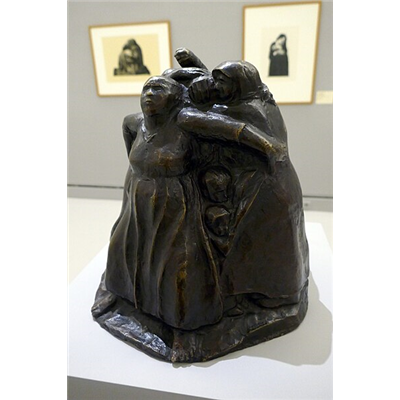 |
Kathe Kollwitz (1867-1945) was one of the most respected German artists of the early 20th century. A painter, sculptor and printmaker, Kollwitz lived most of her life in Berlin, where she documented the effect of poverty and war on the ordinary people. This lecture will offer a survey of her life and work, examining the impact that Expressionism had on the artist and her stubborn refusal to be silenced by the Nazis after 1933.
After gaining a PhD at the Warburg Institute, University of London, Angela Smith has become an established author, lecturer and contributor to television programmes, most recently Digging Up Britain’s Past. |
|
| Wednesday, 07 May 2025 |
| Tirzah Garwood: Beyond Ravilious |
| James Russell |
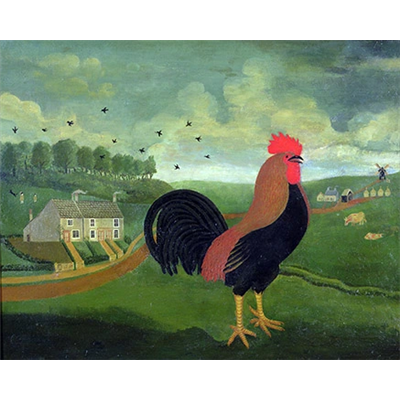 |
The name of Eric Ravilious (1903-1942) has become familiar over the past decade, but few people are aware that his wife, Tirzah Garwood (1908-51), was a talented and original artist in her own right. According to Brighton and Hove Museums, Garwood "is one of the most original and distinctive figures of twentieth century British art". A witty observer of the human condition, the youthful Garwood became established as a wood engraver of rare ability. After marrying Ravilious, she took up paper marbling, quickly achieving renown for the dazzling originality of her decorative papers. She later turned to oil painting, producing in a few short years a series of strange, beautiful paintings.
Having studied History at Pembroke College, Cambridge, James Russell enjoyed a lengthy stint selling contemporary paintings and sculpture in Santa Fe, New Mexico, an experience that inspired him to begin writing and lecturing on 20th century art. He has curated major exhibitions for museums around the country. His exhibition devoted to Tirzah Garwood is taking place at Dulwich Picture Gallery until 26th May 2025. Click here for the website. |
|
| Wednesday, 02 April 2025 |
| The Mayan Civilisation of Central America |
| Duncan Pring |
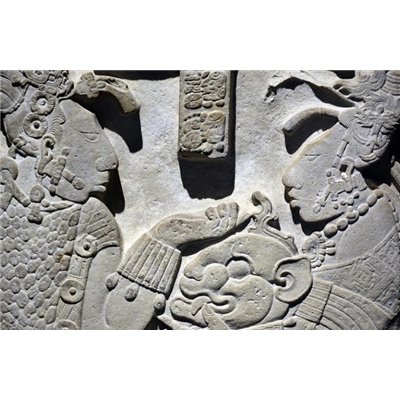 |
Whilst a great deal is known to many about the Greek, Roman and Egyptian civilisations, the ancient civilisations of the New World (The Maya, the Aztecs and the Incas) are much less well known. This lecture's focus is on the Maya, arguably the greatest of the three. The Maya lived in Central America between 1000 BC and 1528 AD, when they were conquered by the Spanish. The peak of their civilisation was between 300 and 900 AD. During that time, they built enormous monuments, produced jade and ceramic items of great beauty, and developed a calendar that was far more advanced than anything in Europe at the time. They had an advanced understanding of mathematics and astronomy and developed a hieroglyphic script which scholars are beginning to decipher, allowing us to understand their achievements much more fully.
Educated at Oxford and London universities, Duncan Pring’s PhD thesis was on The Preclassic Ceramics of Northern Belize. He has published widely on Mayan ceramics. |
|
| Wednesday, 05 March 2025 |
| Pots and Frocks: The World of Grayson Perry |
| Ian Swankie |
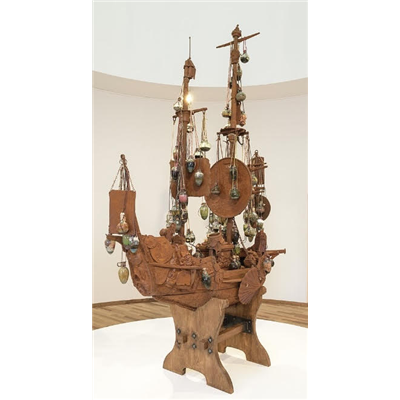 |
Best known for his outlandish appearances dressed as his feminine alter ego Claire, Grayson Perry is now a core part of the art establishment, a Knight of the Realm, Turner Prize winner, Royal Academician and a popular broadcaster. His works include ceramics, textiles, tapestries and prints. Often controversial, he holds a mirror up to modern society. This lecture will examine Grayson Perry’s work, his thought-provoking exhibitions, and the unique character inside the flamboyant frocks.
With a contagious enthusiasm for art and architecture, Ian Swankie is an official guide at Tate Modern, Tate Britain, Guildhall Art Gallery and St Paul’s Cathedral. He is a Freeman of the Worshipful Company of Art Scholars, one of the City livery companies. |
|
| Wednesday, 05 February 2025 |
| John Singer Sargent: The Private Radical |
| Gavin Plumley |
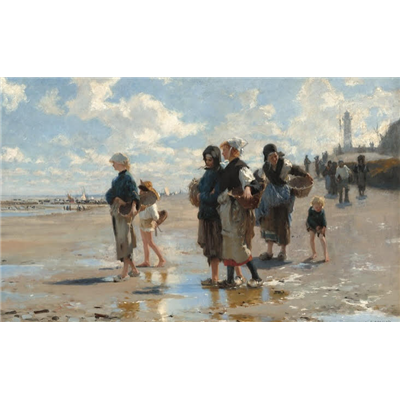 |
Whether drawing duchesses or portraying princes, John Singer Sargent (1856-1925) was high society’s leading portraitist. Flaunting a consummate technique, his luxurious canvases mirrored his subjects’ wealth. Yet beneath the dazzling veneer of works such as Madame X and The Daughters of Edward Darley Boit lurks a much rawer world by far. This lecture will chart the artist’s life and his prolific output, and show that, like the era he came to represent, Sargent was always on the cusp of seismic change.
Gavin Plumley is a writer and broadcaster, appearing on Radios 3 and 4, and contributing to newspapers, magazines and opera and concert programmes worldwide. He lectures widely on the culture of Central Europe to organisations such as the Royal Opera House, the National Theatre, the National Gallery, the British Museum and the V&A. |
|
| Wednesday, 06 November 2024 |
| A Crisis of Brilliance: Young British Artists 1908-1919 |
| David Haycock |
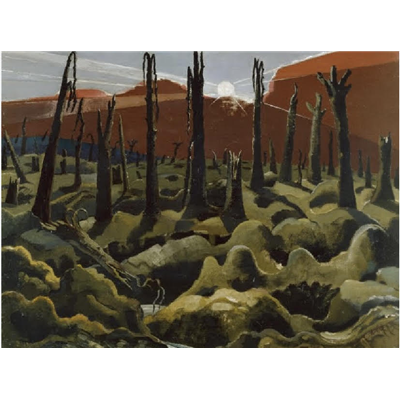 |
In the years leading up to the First World War, the Slade School of Art in London was the leading establishment in England for the teaching of drawing and painting. Its students included some of the most important British artists of the first half of the 20th century, including Stanley Spencer, Paul Nash, Mark Gertler, Richard Nevinson and Dora Carrington. Based on his book A Crisis of Brilliance: Five Young British Artists and the Great War (2009), this lecture will explore the fascinating story of these artists’ interlocking lives and of their artistic education and development.
David Boyd Haycock is a freelance art historian and writer. A former curator at the National Maritime Museum in Greenwich, he is a specialist in British art and culture in the period 1860 to 1940. His latest books include a new biography of the young Augustus John and, as we heard in May 2023, a biography of the equestrian painter Lucy Kemp-Welch. |
|
| Wednesday, 02 October 2024 |
| Fashion, Feathers and Fury: Women’s Fight for Change |
| Tessa Boase |
 |
When social historian Tessa Boase told the Royal Society for the Protection of Birds that she wanted to write their early story, they refused to let her visit their archives. To a former investigative journalist, this was a challenge she could not resist. This lecture will shine a light on the intriguing story of women’s love affair with plumage, at a time when every woman of every class wore a hat, and that of the brave eco-feminists who fought back on behalf of the birds.
Tessa Boase is a freelance journalist, lecturer and campaigner with an interest in uncovering the stories of invisible women in the 19th and early 20th centuries. She’s the author of three books of social history: Etta Lemon: The Woman Who Saved the Birds (first published as Mrs Pankhurst’s Purple Feather in 2018), The Housekeeper’s Tale: The Women Who Really Ran the English Country House (2014) and London’s Lost Department Stores: A Vanished World of Dazzle and Dreams (2022). Since uncovering the feminist origins of the RSPB, she has been campaigning for public recognition of its female founders. |
|
| Wednesday, 04 September 2024 |
| Donatello: Renaissance Genius |
| Paula Nuttall |
 |
Donatello is one of the artistic giants of the Italian Renaissance. Arguably the greatest sculptor of all time, working in a range of media, he pioneered the new style of sculpture that emerged in Florence around 1400. This lecture will outline his career working for patrons in Florence, Siena and Padua.
Paula Nuttall is a specialist in Italian and Northern European Renaissance art and has published widely, notably From Flanders to Florence: The Impact of Netherlandish Painting 1400-1500 (Yale, 2004). She has collaborated on major exhibitions, including Jan Eyck: an Optical Revolution (Ghent, 2020), is a former Director of the V&A Medieval and Renaissance Year course, and a lecturer at both the Courtauld Institute and the British Institute of Florence. |
|